In 1987, Arizona Governor Evan Mecham publicly declared that Martin Luther King Jr. did not deserve a holiday after rescinding an order given by the previous governor to make that happen.
This prompted widespread controversy. Various media figures, artists, civil rights activists, and even the NFL condemned the action.
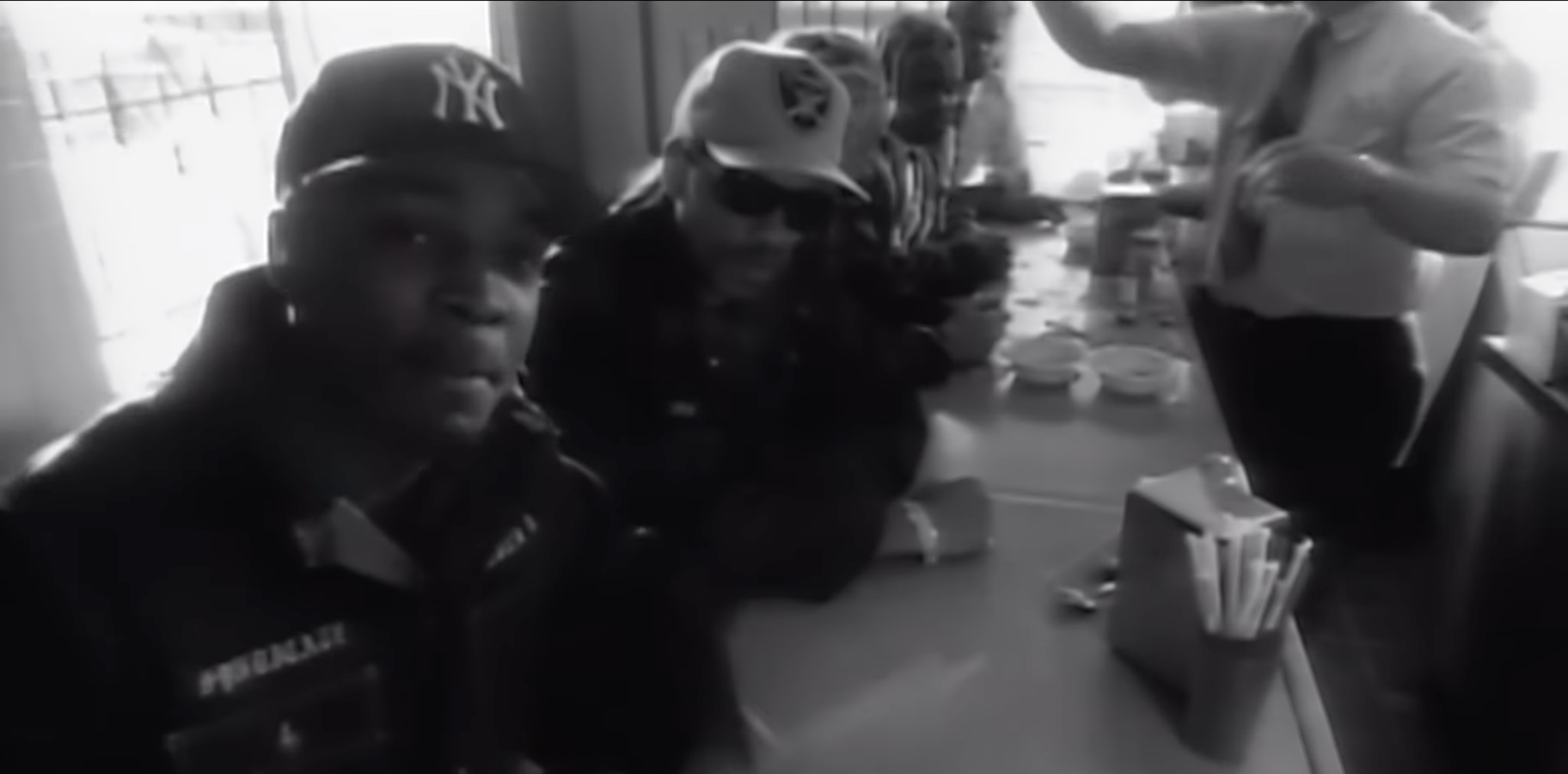
The boldest of all these statements came in 1991 from the legendary Public Enemy with their song, “By The Time I Get To Arizona.”
By this time, Mecham had already been impeached and removed from office, but Arizona was still a couple years out from recognizing this day as a paid holiday.

While this song’s title references Isaac Hayes’ “By The Time I Get To Phoenix” (originally written and performed by Jimmy Webb), it bears very little resemblance other than title.
Hayes’ song is the tale of a man leaving Los Angeles to get away from a relationship with an unfaithful woman. Phoenix is simply a point he passes through.
In “By The Time I Get To Arizona,” he’s not escaping something. He’s headed to Arizona to get something. Respect for King.
The song takes shots at the Arizona legislature as well as Mecham, but the video sparked much more controversy, ending with fictionalized versions of Arizona politicians being assassinated.
Less mentioned are the acts of wanton violence either allowed or carried out by state against 1960s civil rights activists and protestors, also shown in the video.
The video was polarizing and drew condemnation from Coretta Scott King because it promoted violence to achieve political change.
But Public Enemy stood by it. Their spokesperson Harry Allen stated, ”Scientific counterviolence always remains an optional response to racist violence.”
Allen also questioned if King would have remained non-violent if he had survived the assassination.
“Dr. King’s policy was that nonviolence would achieve the gains for black people in the United States. His major assumption was that if you are nonviolent, if you suffer, your opponent will see your suffering and will be moved to change his heart. That’s very good. He only made one fallacious assumption: In order for nonviolence to work, your opponent must have a conscience. The United States has none.” – Kwame Ture
Last year, the nation’s flags were at half staff, for a podcaster who then received a government-sanctioned ceremony after he was murdered in an act of conservative, white-on-white crime. My thoughts on this.
This year, the vice president slandered someone shot in the face by ICE (also white-on-white crime) for simply driving too close to ICE.
And that’s if this state violence gets any sort of widespread national coverage and isn’t just swept under the rug.
The issue of the video for “By The Time I Get To Arizona, is not the violence. It’s who it’s perpetrated by and against.
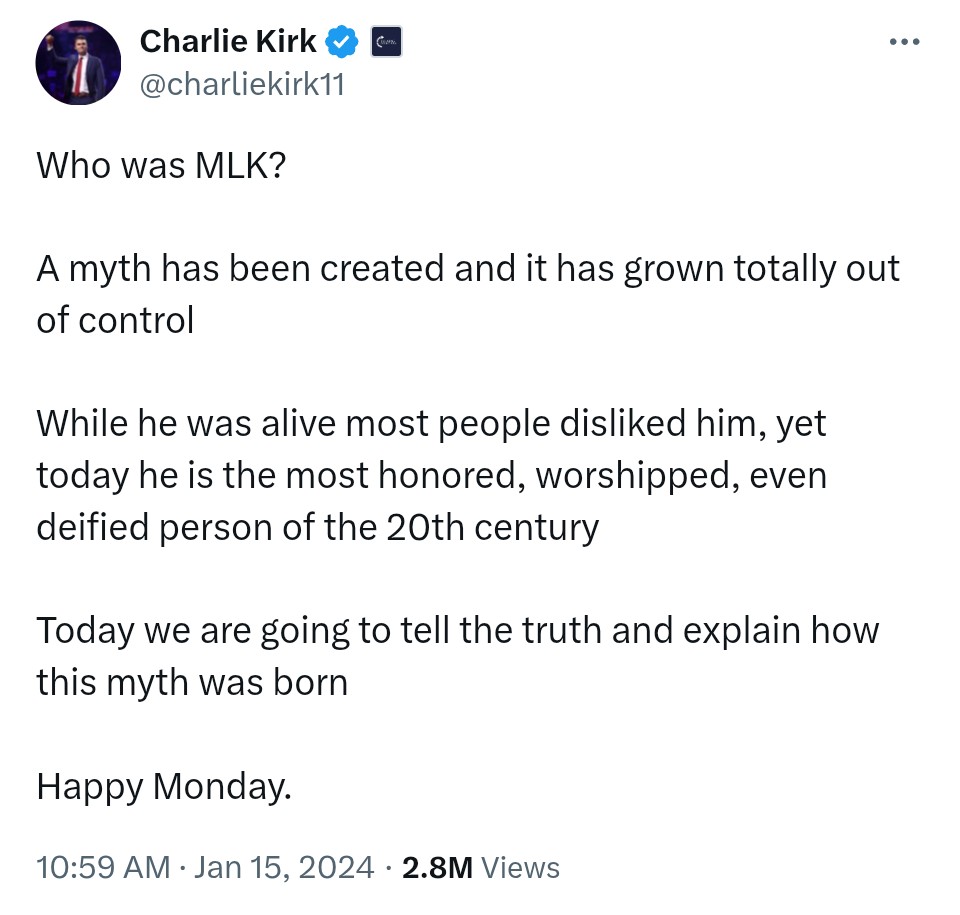
At his death, King was disliked by 75% of the country because he fought for sweeping socioeconomic changes, alongside labor movements, and against the invasion of Vietnam. Among other things.
So, what happened?
Americans are taught a gross mischaracterization of King’s politics in public schools. It basically starts at the bus boycotts, climaxes at the “I Have a Dream” speech and ends with his assassination. Left out are the more radical stances he was taking, no matter how unpopular.
Today, very few people speak ill of King. Even if they would have stood diametrically opposed to him if he were alive today.
It allows the Civil Rights Movement to be reframed as a challenge America overcame together.
This day should be a day of reckoning, if anything. But it hasn’t been, because whitewashing Dr. King’s legacy has allowed people participating in the very power structures King denounced to use him as a figure to map their ideals onto.
In the aftermath of George Floyd’s murder, these people weaponized King’s words to chastise protestors and rioters for not being peaceful instead of taking a hard look at the systems that led them here.
“By The Time I Get To Arizona” took aim at state politicians because they brazenly opposed King’s legacy. They opposed what he stood for, rather than twisting what he stood for into something palatable.
It delivers a message: violence remains an option in the face of racist state violence. It demands respect for a man who stood against the state’s structural racism.
Maybe it’s time to reframe things, as King’s holiday faces similar opposition in 2026.
It’s a day that recognizes the legacy of a man who supported non-violence resistance and then was gunned down. We should be giving that a little more thought as we contemplate the role of violence in our politics.
And while we’re there, we should recognize what his actual beliefs and actions were, and what it means to honor them truly.
Maybe it’s time to revisit what would happen by the time Public Enemy got to Arizona.
Public Enemy’s most recent album, Black Sky Over The Projects: Apartment 2025, is available on Bandcamp.